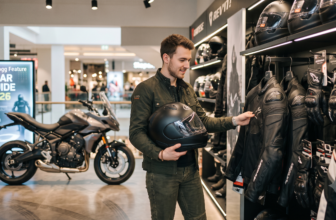


Learn how to choose the perfect motorcycle helmet with our beginner-friendly guide.
Discover helmet types, safety certifications, fit, comfort, and expert buying advice before your next ride.
Introduction
Buying your first motorcycle helmet—or replacing an old one—is one of the most important decisions you’ll make as a rider. Unlike choosing a jacket or a pair of gloves, your helmet serves as your primary protective equipment every time you get on a motorcycle.
Yet many beginners focus on the wrong things. They compare colors instead of safety, choose a helmet based on appearance rather than fit, or buy the cheapest option available without understanding the compromises involved.
The truth is that the best motorcycle helmet isn’t necessarily the most expensive one—it’s the one that fits your head correctly, matches your riding style, and meets recognized safety standards.
This guide will walk you through the essential factors every rider should consider before purchasing a helmet. Whether you’re preparing for your first motorcycle or upgrading your touring gear, you’ll learn how to choose a helmet with confidence.
Why Your Helmet Matters
Motorcycle helmets are designed to perform one critical task: help reduce the risk of head injury during an impact. While no helmet can eliminate all risk, a well-made and properly fitted helmet provides a level of protection that far exceeds riding without one.
Beyond protection, a quality helmet also improves the overall riding experience by reducing wind fatigue, shielding you from rain and debris, and helping you stay focused on the road.
Think of a helmet as a long-term investment in both your safety and your comfort.
Step 1 – Choose the Right Helmet Type
Not every helmet is built for the same purpose. Understanding the main categories will help narrow your choices.
Full-Face Helmets
Full-face helmets offer complete coverage around the head and chin. They are popular with sport riders, commuters, and anyone seeking maximum enclosure.
Best for:
- Daily riding
- Highway use
- Sport riding
- Year-round protection
Modular (Flip-Up) Helmets
Modular helmets combine many of the protective characteristics of full-face helmets with the convenience of a chin bar that lifts upward.
They are especially popular among touring riders because they make fuel stops, conversations, and short breaks much more convenient.
If you’re interested in this style, our Shoei Neotec 3 Review explores one of the leading premium modular helmets available today.
Open-Face Helmets
These helmets leave the face exposed while protecting the top, sides, and back of the head.
They provide excellent visibility and airflow but offer less facial protection than enclosed designs.
Adventure Helmets
Adventure helmets blend road and off-road features.
Typical characteristics include:
- Peak visor
- Large eye opening
- Excellent ventilation
- Compatibility with goggles
These helmets are well suited for riders who divide their time between pavement and gravel roads.
Step 2 – Safety Certifications
Before considering design or features, confirm that the helmet meets the safety standards required in your region.
Common certifications include:
- DOT (United States)
- ECE (Europe and many other countries)
- Snell (Independent testing organization)
Certification indicates that the helmet has met specific testing requirements established by the relevant standard.
Always verify the certification label rather than relying solely on product descriptions.
Step 3 – Fit Comes Before Price
A premium helmet that doesn’t fit correctly will never perform as intended.
A properly fitted helmet should:
- Sit evenly on your head.
- Feel snug without causing pain.
- Remain stable when you move your head.
- Avoid excessive movement during normal use.
It should not create pressure points on the forehead or temples, nor should it slide freely from side to side.
If possible, try several brands, as different manufacturers often use different internal head shapes.
Step 4 – Consider Your Riding Style
Ask yourself how you actually ride.
- Daily commuting
- Weekend rides
- Long-distance touring
- Adventure travel
- Urban riding
Your answers should influence your choice more than current trends or online popularity.
For example, riders who spend hours on highways may prioritize comfort, wind management, and communication compatibility, while short-distance commuters may focus on simplicity and convenience.
Step 5 – Look Beyond the Basic Specifications
Once you’ve chosen the correct type and fit, consider features that improve day-to-day riding.
These may include:
- Integrated sun visor
- Pinlock-ready visor
- Effective ventilation
- Removable interior lining
- Washable cheek pads
- Secure visor mechanism
- Comfortable chin strap
- Communication system compatibility
Remember that useful features should support your riding—not simply increase the price.
Step 6 – Comfort Matters More Than You Think
A helmet may feel comfortable for five minutes in a showroom but reveal pressure points after an hour on the road.
Look for:
- Balanced weight
- Quality interior materials
- Good ventilation
- Low wind noise
- Stable fit at speed
Long-distance comfort is especially important if you ride regularly.
Step 7 – Think About the Future
Many riders eventually add accessories such as Bluetooth communication systems or ride in changing weather conditions.
If you plan to install a communicator, choose a helmet designed to accommodate one cleanly.
Similarly, features like an integrated sun visor or anti-fog visor system may become increasingly valuable as your riding experience grows.
Common Mistakes Beginners Make
Avoid these common errors:
- Buying based only on appearance.
- Choosing the cheapest helmet available.
- Purchasing a loose-fitting helmet.
- Ignoring safety certification.
- Forgetting to consider ventilation.
- Not thinking about long-term comfort.
- Choosing a helmet that doesn’t match your riding style.
A thoughtful purchase today can provide years of confident riding.
AFFBLOGG Editor’s Advice
If your budget allows, invest in the highest-quality helmet that fits you properly and suits your riding needs.
Premium helmets often distinguish themselves through refinement rather than dramatic feature differences. Better materials, improved comfort, quieter operation, and thoughtful engineering can make a significant difference over years of ownership.
For riders considering a premium modular helmet, our in-depth Shoei Neotec 3 Review explains why it earned one of the highest ratings we’ve awarded.
Continue Reading on AFFBLOGG
To help you make a more informed decision, explore these detailed guides and reviews:
Helmet Reviews
- Shoei Neotec 3 Review – Our complete evaluation of one of the industry’s leading premium modular touring helmets.
Communication System Reviews
- Sena 50C Review – Premium camera and communication system.
- Sena 10C EVO Review – Integrated camera communicator offering excellent value.
Conclusion
Choosing the right motorcycle helmet isn’t about buying the most expensive model or following the latest trend. It’s about finding a helmet that fits correctly, meets recognized safety standards, and supports the way you ride.
By understanding helmet types, prioritizing fit, considering your riding habits, and focusing on quality over marketing, you’ll be better equipped to make a decision that benefits both your safety and your enjoyment on the road.
After all, every memorable ride begins with the confidence that comes from wearing the right gear.
Subscribe to our blog
Don't worry, we don't spam