
Buying your first motorcycle is an exciting milestone, but it can also feel overwhelming due to the wide variety of options available. From sport bikes and cruisers to scooters and adventure motorcycles, each category offers unique features and riding experiences. The best beginner motorcycle is not necessarily the fastest or most expensive—it’s the one that aligns with your experience level, riding goals, comfort, and budget. Taking the time to understand your needs will help you make a confident and informed decision.
Determine Your Riding Style
Before selecting a motorcycle, it’s important to think about how you plan to use it. Your riding style will significantly influence the type of bike that suits you best.
City Commuting
If your primary goal is daily transportation in urban environments, lightweight motorcycles between 125cc and 300cc are often the most practical choice. These bikes are easy to maneuver in traffic, simple to park, and highly fuel-efficient. Scooters and small-displacement motorcycles are especially popular among beginners because they are forgiving and easy to handle.
Weekend Recreation
For riders who want to enjoy weekend rides, scenic routes, or casual cruising, motorcycles in the 300cc–500cc range offer a great balance of performance and comfort. Naked bikes, entry-level sport bikes, and cruisers are excellent options for this type of riding. They provide enough power for enjoyable rides without being overwhelming for new riders.
Long-Distance Touring
If you plan to travel long distances or take road trips, comfort becomes a top priority. Touring motorcycles and adventure bikes are designed for extended rides, offering upright seating positions, wind protection, and the ability to carry luggage. While these bikes can be larger and heavier, some beginner-friendly models are available.
Off-Road Adventures
For those interested in exploring trails, dirt roads, or rugged terrain, dirt bikes and dual-sport motorcycles are ideal. These bikes are lightweight, durable, and built to handle uneven surfaces. Dual-sport motorcycles are especially versatile because they can be used both on-road and off-road.
Choose the Right Engine Size
Engine displacement plays a major role in how a motorcycle performs and how easy it is to control.
- 125cc–250cc: Ideal for beginners and city riding. These bikes are lightweight, easy to handle, and forgiving for new riders.
- 300cc–500cc: A great middle ground that offers more power while still being manageable for beginners and intermediate riders.
- 600cc and above: Typically better suited for experienced riders due to increased speed, acceleration, and weight.
Starting with a smaller engine size allows you to build confidence, improve your riding skills, and develop safe habits before moving on to more powerful motorcycles.
Consider Comfort and Ergonomics
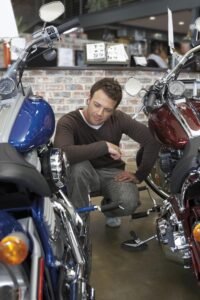
Comfort is one of the most important factors when choosing your first motorcycle. A bike that fits you properly will be easier to control and more enjoyable to ride.
Pay attention to:
- Seat height
- Riding position (upright, leaned forward, or relaxed)
- Handlebar reach
- Footpeg placement
- Overall weight of the motorcycle
You should be able to place both feet on the ground comfortably when stopped. If the bike feels too tall or heavy, it may be difficult to manage, especially at low speeds.
Set a Realistic Budget
When buying your first motorcycle, it’s important to consider the total cost of ownership—not just the purchase price.
Additional expenses may include:
- Insurance premiums
- Registration and licensing fees
- Routine maintenance and servicing
- Riding gear (helmet, gloves, jacket, boots)
- Fuel or charging costs (for electric motorcycles)
- Accessories and upgrades
Setting a realistic budget helps you avoid unexpected financial strain and ensures you can properly maintain your motorcycle.
Prioritize Safety Features
Safety should always be a top priority, especially for new riders. Modern motorcycles often come equipped with features designed to improve control and reduce risk.
Look for:
- ABS (Anti-lock Braking System)
- Traction Control
- LED Lighting for better visibility
- High-quality tires
- Reliable braking systems
ABS is particularly important for beginners because it helps prevent wheel lock-up during sudden braking, reducing the risk of accidents.
New vs. Used Motorcycles
Deciding between a new or used motorcycle depends on your budget and preferences.
New Motorcycles
- Come with a manufacturer warranty
- Include the latest technology and safety features
- Require less immediate maintenance
- Offer peace of mind with no previous wear and tear
Used Motorcycles
- More affordable upfront
- Slower depreciation compared to new bikes
- Greater value for budget-conscious buyers
If you choose a used motorcycle, always inspect it carefully or have it checked by a professional mechanic to ensure it is in good condition.
Take a Training Course
Before hitting the road, consider enrolling in a motorcycle safety course. These courses teach essential riding skills, safety techniques, and road awareness. Many programs also provide hands-on training, which can boost your confidence and prepare you for real-world riding situations.
Final Thoughts
Your first motorcycle should inspire confidence, comfort, and enjoyment. Focus on finding a bike that matches your skill level and intended riding style rather than chasing maximum speed or engine size. Starting with a manageable motorcycle allows you to learn safely and build experience over time.
As your skills improve, you can always upgrade to a larger or more specialized bike. The right first motorcycle is one that encourages you to ride responsibly, continue learning, and enjoy every mile of your journey.